

Tales Of The Forest – Independent Study
UE5 Audio Implementation Demonstration
This short story game takes inspiration from fantasy stories and explores the use of audio tools that aid the visuals to help guide you through spaces that use wave-based simulated reverbs using Project Acoustics along with creatively built spaces.
Game Engine
Unreal Engine 5
Additional Tools
Wwise
Project Acoustics
Project Description
‘Tales Of The Forest’ is a third person short story puzzle game set in a fantasy world. You play as a forest creature in a region of this world surrounding the mountain ‘Averneth’ and navigate through forests, lakes and caverns to find your path. The soundtrack of this game is intended to help guide you, be it in the ambiences, the objects or the music.
This project serves to explore the use of sound design and audio implementation to help guide narrative of video games and includes a rich soundscape to immerse the player in the world they are exploring. Considerations towards this goal include the use of audio objects, surround music mixing, ambience layering and geometry informed reverbs using Project Acoustics.
Considerations For Non-Stereo Formats
Since the beginning of this project’s development, the foundations of the audio implementation were made with consideration for audio formats larger (and smaller) than stereo.
Largely this was achieved through the use of audio objects, an audio pipeline that delivers metadata (such as position and orientation) along with each audio object so that the end listener’s audio system can render the audio appropriately, whether they have headphones, a 7.1.2 system or any other audio configuration.
It achieves this without the need to fold down too, which achieves a more accurate representation of audio, regardless of speaker configuration.
Dynamic Ambience Layering
A large focus of this project was ensuring that the environments the player explores sound appropriate in context, while balancing the detail to aid in immersion without distracting the player from what they are doing.
By creating ambience zones within the level that fade into one another, it ensures that the ambiences the player hears are always different wherever they are on the map without being so contrasting that distract away from the player’s objective.
To create a more cohesive and believable ambience, sweeteners were added to each area that create a common ambience, this helps to tie together the ambience zones so that the ambience appropriately changes as the player explores.
Geometry-Informed Reverbs (Project Acoustics)
It’s important to explore new tools in game audio, which is why Project Acoustics (PA) was chosen for ‘Tales Of The Forest’. PA uses wave-based simulation to create accurate reverbs and occlusion based on in game geometry and materials.
The use of PA within this game was to not only show how it works functionally, but to explore where it’s appropriate to use it and where it may be better to use more creative, and as a result, less accurate audio environment tools.
Within this project, PA is used in every level of the game, however isn’t always audible. Due to the simulations done by PA, particularly in exterior environments, the reverbs generated were sometimes underwhelming. In these instances, a creative decision was made to also implement algorithmic reverbs and delays as appropriate. This can be heard in the first scene where PA only produces a small amount of the reverb heard.
This wasn’t always the case though. PA did a good job with interior environments, especially when the dimensions of the room change, such as in the first cave scene of the game. The change of room dimensions is of particular note as it changes the reverb reactively as the player travels through the level.
Project Context
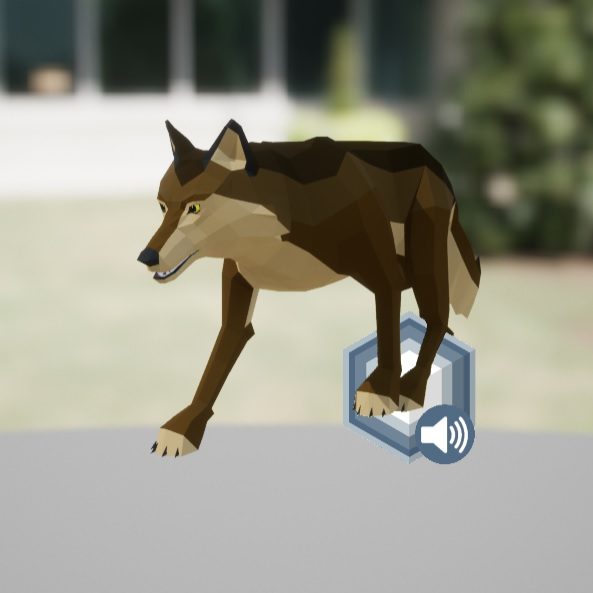
‘Tales Of The Forest’ sits among video games that focus on player experience and immersion in the world and narrative. One game that was a main inspiration early in development was ‘Spirit Of The North’ and originally ‘Tales Of The Forest’ had the main character as a wolf as opposed to a forest creature. What stood out with ‘Spirit Of The North’ is its fantastical elements in the level and sound design. ‘Tales Of The Forest’ adopted these fantasy elements and the inspiration can be seen through the platforming and puzzle elements. Where ‘Spirit Of The North’ became less inspirational was in the sound design, as the sound design is not a focus within that game it doesn’t push the audio experience that far.
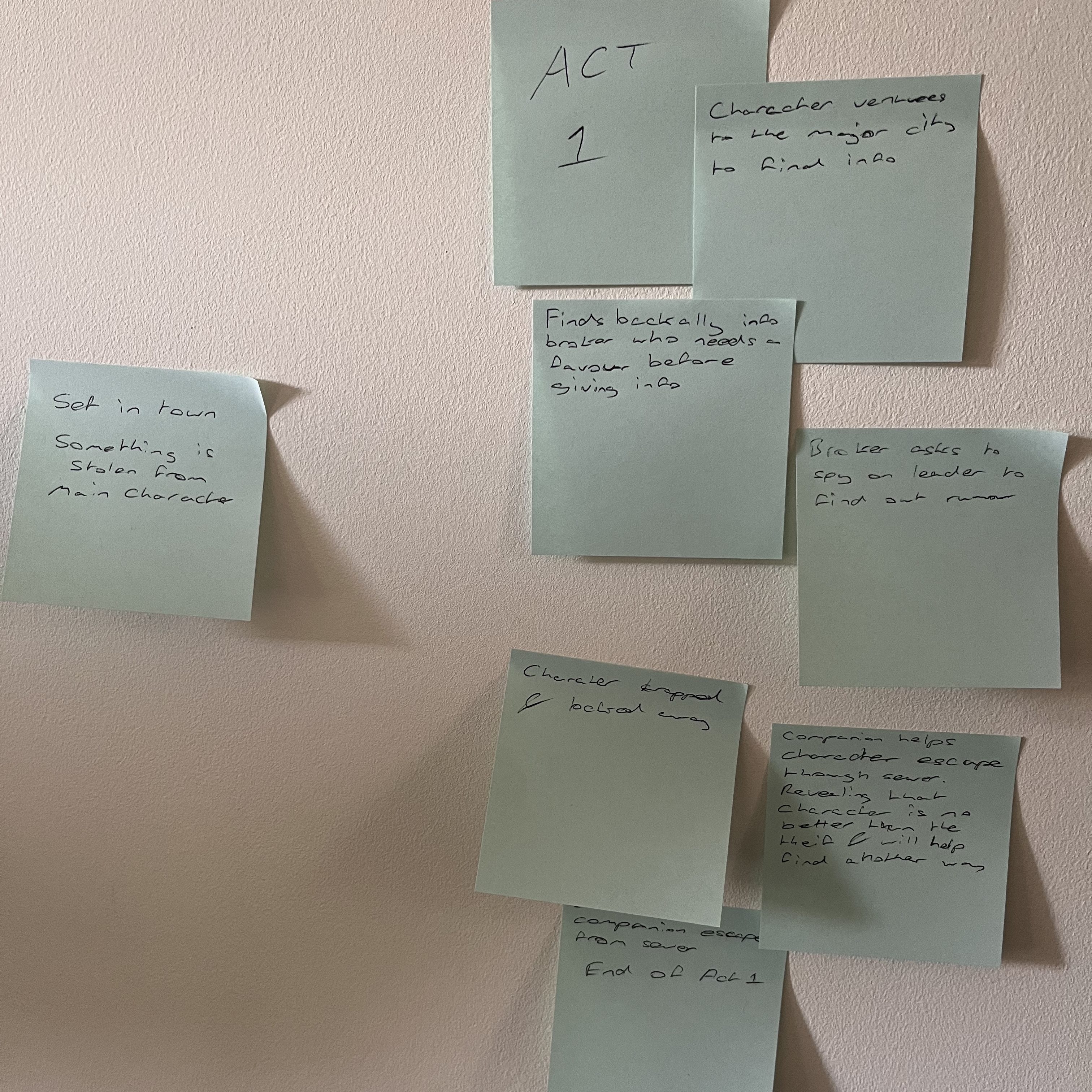
Originally it was intended that the game would be split into three acts, and that this project would tell the first act however the task of designing a narrative that large ended up being out of the scope of this project. ‘Limbo’ then became a source of inspiration for this project as it hinges on a narrative that is a looping set of events. This seemed an appropriate inspiration for ‘Tales Of The Forest’ as it meant that I could design the narrative in a scalable way, knowing that the ending would always be the same. While the size of this project is much smaller, using ‘Limbo’ as inspiration helped hone the audio experience to be as detailed as possible while having an engaging narrative.
A prominent feature of the soundtrack of ‘Tales Of The Forest’, particularly serving the storytelling is the narrator. ‘Hellblade: Senua’s Sacrifice’ demonstrates how much a narrator can add to the auditory experience of a game and as a result it became a big inspiration for this project. There are two distinctions with the narrator in ‘Hellblade’ that make it so effective. The first is its use of binaural recording for the dialogue. The second is the way the narrator is established as being present in the world, as opposed to telling the story in a way that is detached from the events in the game. The latter became a great inspiration for the dialogue direction in ‘Tales Of The Forest’. The need for binaural wasn’t important for the narrative being told in this project, however the creative decision was made for the narrator to be telling the story in a way that places them within the world. When working with the voice actor, this vision was established with them and any direction of the dialogue was done so with this goal in mind.
Where ‘Tales Of The Forest’ builds on this is in the creative processing, where it draws inspiration from ‘Darkest Dungeon’, another game where the narrator is prominent. While this narrator is more detached from the world, the processing on the voice makes it sound ethereal. The inspiration from this ethereal sound is heard within the narration of ‘Tales Of The Forest’ but with the objective of sounding lighter and less dramatic.
 Dan Blatherwick | Sound Designer